 Hugging Face
Yanghao Chen
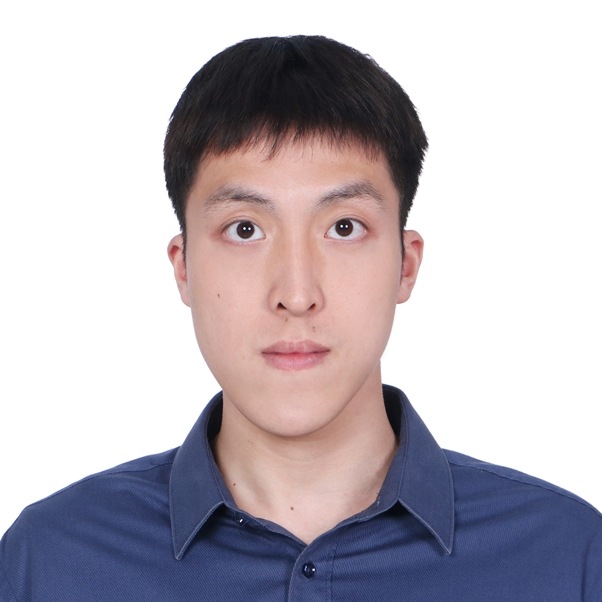
Hi! I’m Yanghao Chen, a final-year undergraduate at Tongji University, studying Engineering Mechanics in the School of Aerospace Engineering and Applied Mechanics. My interests center on scientific machine learning and computational mechanics.
My research began with fine-tuning large language models using LoRA on Google Colab for question answering in mechanics of materials. I then developed ConvLSTM models to predict lithium concentration and von Mises stress image sequences in battery materials using MATLAB–COMSOL simulation data. I also studied shock propagation with physics-informed neural networks (PINNs), comparing standard and artificial-viscosity formulations against the analytical inviscid solution.
Together, these experiences have shaped my interest in combining machine learning with numerical methods for scientific simulation. My current research focuses on neural operators, which learn mappings between function spaces, and hybrid FEM–neural operator solvers based on non-overlapping domain decomposition. I aim to combine AI-based models with GPU-accelerated numerical computing to make engineering simulations more efficient and scalable.
At Tongji, I have been fortunate to work under the guidance of Prof. Ying Zhao and Prof. Xianyang (Tom) Chen. From January to October 2026, I was an undergraduate research intern in the Department of Civil and Systems Engineering at Johns Hopkins University, working with Prof. Somdatta Goswami in Centrum IntelliPhysics.
News
Current Research
I am developing GPU-accelerated hybrid FEM–neural operator solvers based on non-overlapping domain decomposition. FEM and neural-operator subdomains are connected through shared interfaces. Neural operators learn mappings from interface displacement fields to subdomain stress fields. Interface reaction forces computed from predicted stresses are transferred to the FEM solver. The FEM solver uses these forces to compute updated interface displacements and returns them to the neural operators for the next coupling iteration.
Skills
- Scientific Machine Learning: PyTorch, JAX, Neural Operators (Transolver, DeepONet), PINNs, ConvLSTM
- Computational Mechanics: JAX-FEM, FEniCSx, Abaqus, COMSOL Multiphysics (LiveLink for MATLAB), Gmsh
- Programming & Tools: Python, MATLAB, Linux, Git/GitHub, Matplotlib, Origin
- LLM Fine-Tuning: Qwen2.5, LoRA, Instruction Dataset Curation
- Languages: Mandarin Chinese (native), Cantonese, English