CV
View CV (PDF) | Project repositories
Education
 Tongji University, Shanghai, China
- Bachelor of Engineering in Engineering Mechanics, School of Aerospace Engineering and Applied Mechanics
- Sep. 2023 - Present (Expected Jun. 2027)
- GPA: 87/100
 Johns Hopkins University, Baltimore, MD, USA
- Visiting Undergraduate Research Intern, Department of Civil and Systems Engineering
- Jan. 2026 - Oct. 2026
- Research focus: GPU-accelerated FEM and hybrid FEM–neural operator coupling
Research Interests
- Computational mechanics
- Scientific machine learning
- Neural operators and surrogate modeling
- GPU-accelerated scientific computing
Current Research
- Hybrid FEM–neural operator solvers based on non-overlapping domain decomposition
- Neural operator learning for subdomain stress prediction
- Iterative exchange of interface forces and displacements
- Shared neural operators for 3D fiber-reinforced composites
Research Projects
1. GPU-Accelerated Hybrid FEM–Neural Operator Solver
Jan. 2026 - Present
- Non-overlapping Domain Decomposition and Hybrid Solver: Developed a hybrid FEM–neural operator solver based on non-overlapping domain decomposition, with FEM and neural-operator subdomains connected through a shared interface.
- GPU-Accelerated Data Generation: Sampled interface displacement fields using Gaussian random fields (GRFs) and used GPU-accelerated JAX-FEM simulations to generate displacement and stress data for neural-operator training.
- Neural Operator Training: Trained Transolver in JAX to learn mappings from interface displacement fields to stress fields within the neural-operator subdomain.
- Iterative Interface Coupling: Computed interface reaction forces from predicted stresses in the neural-operator subdomain and transferred them to the FEM solver. The FEM solver used these forces to compute updated interface displacements and returned them to the neural operator for the next coupling iteration.
Ongoing 3D Composite Extension: We are extending the hybrid solver to a 100-fiber composite with non-overlapping fiber and matrix subdomains. FEM solves the matrix subdomain, while a shared neural operator computes stress fields in all fiber subdomains, using component-specific weights shared across all fibers. The two solvers exchange interface forces and displacements iteratively. We apply periodic boundary conditions to eliminate fiber-end effects.

The FEM subdomain (gray) and neural-operator subdomain (green) are connected through a shared interface (blue).

The mesh is partitioned into non-overlapping FEM and neural-operator subdomains with a shared interface.

Sampled displacement fields on the inner and outer arcs using Gaussian random fields (GRFs). Set horizontal displacement to zero on the left edge and vertical displacement to zero on the bottom edge.

Constructed the point cloud from 4,102 finite element nodes, including 3,847 interior nodes (blue) and 255 boundary nodes (red), for neural-operator training.

Compared the predicted σxx stress field with the FEM reference. The relative L2 error is 0.6262%, and the absolute error map shows the spatial error distribution.

Compared the σxx, σyy, and τxy components of the coupled FEM–neural operator solution with the full FEM reference and plotted the absolute error for each component.

Cross-sectional view of the 3D composite mesh containing 100 fibers, with a close-up of the fiber–matrix interfaces.
2. ConvLSTM Prediction of Concentration and Stress Fields in Battery Materials
Jun. 2025 - Oct. 2025
- Automated Simulation and Data Generation: Generated polycrystalline NMC microstructures and automated MATLAB–COMSOL simulations to produce time-aligned image sequences of lithium concentration and von Mises stress.
- Concentration and Stress Prediction: Trained separate conditional ConvLSTM models in PyTorch to predict future image sequences of lithium concentration and von Mises stress, using past image sequences, grain-orientation maps, and C-rate inputs.
- Model Training: Trained the models with MSE and SSIM losses, using scheduled sampling to select reference or model-predicted frames as inputs during training.
- Prediction Evaluation: Compared predicted lithium concentration and von Mises stress image sequences with COMSOL reference sequences and analyzed error accumulation during autoregressive prediction.
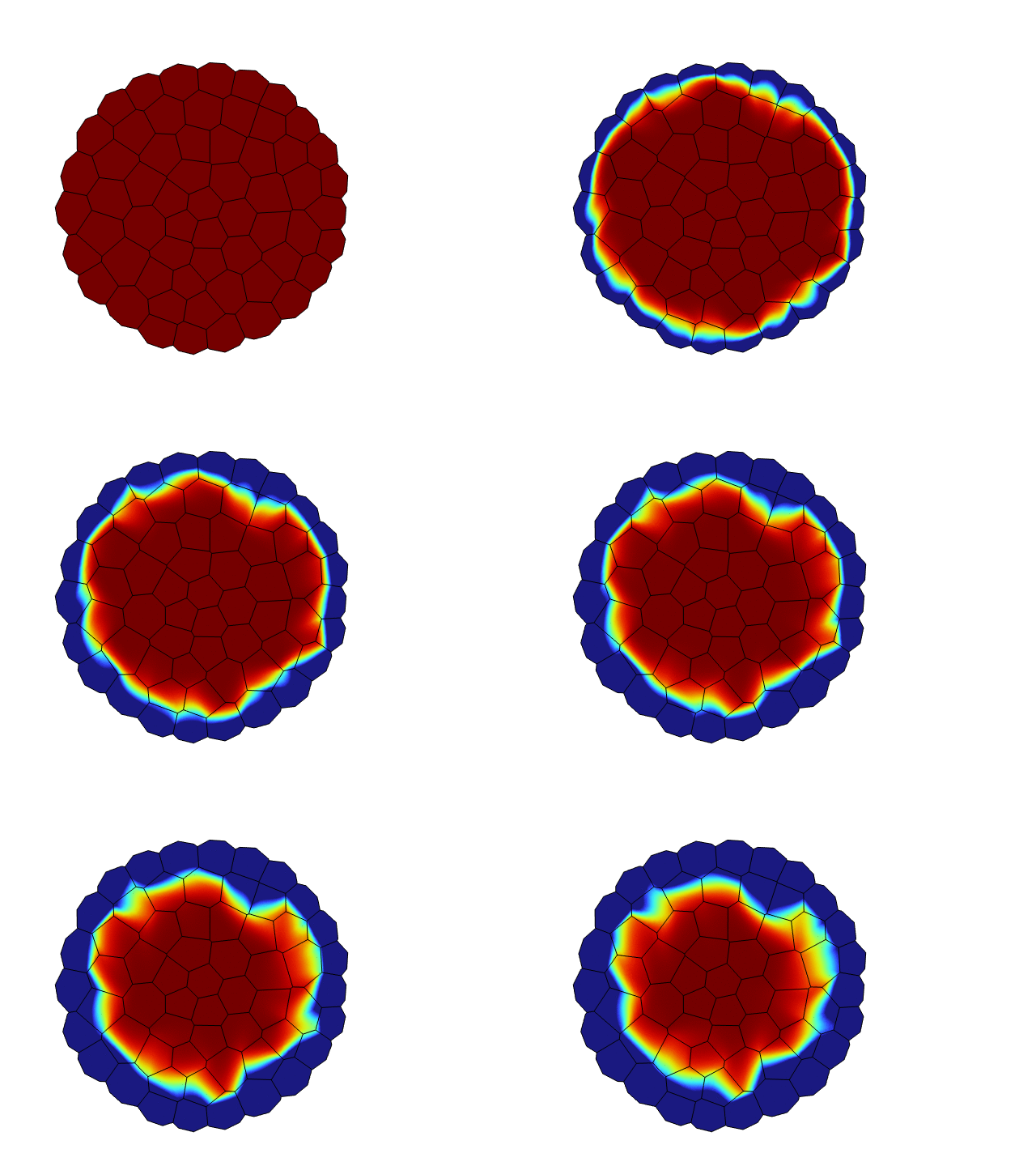
Simulated lithium concentration evolution in a polycrystalline NMC particle using MATLAB–COMSOL.
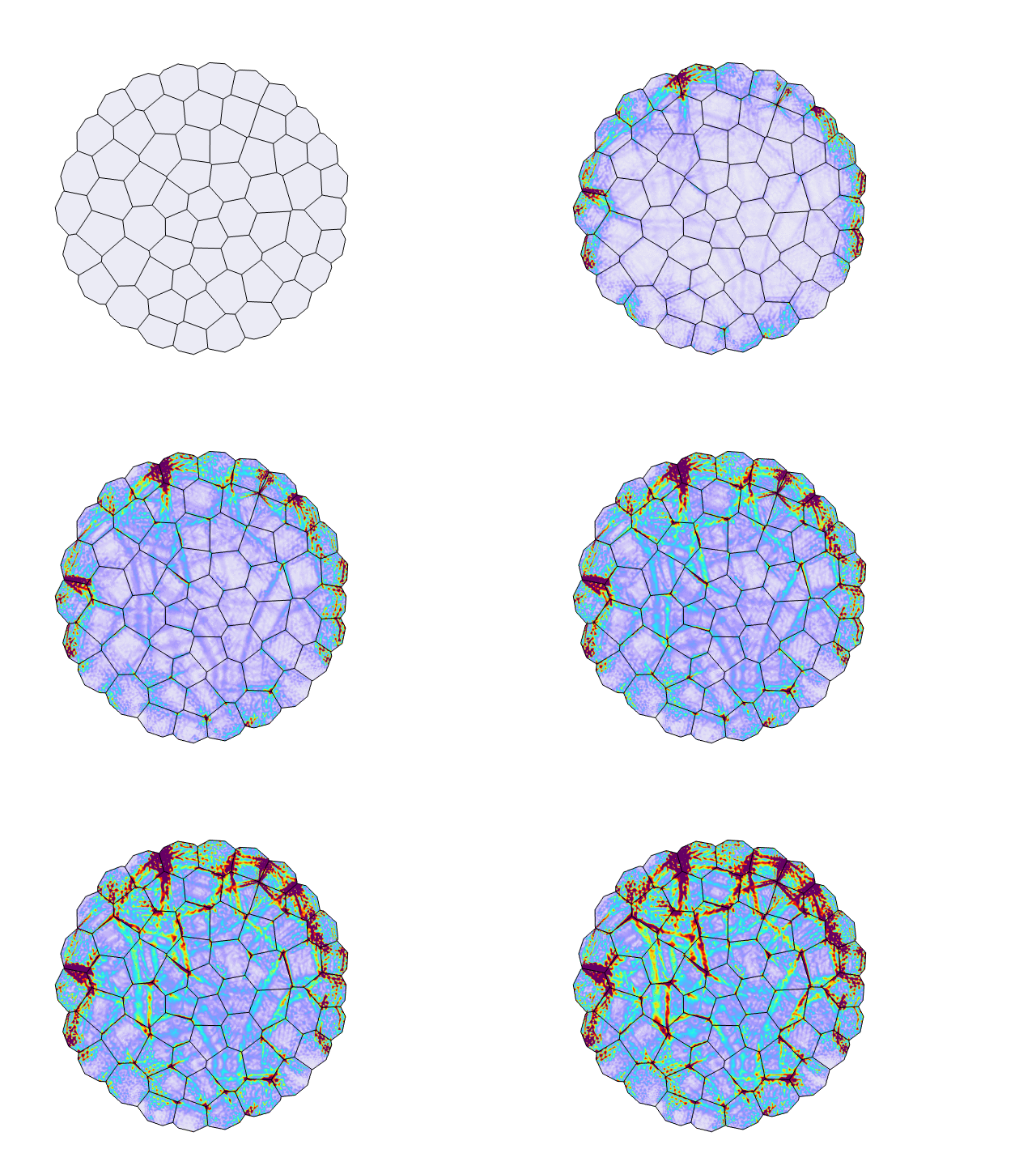
Simulated von Mises stress evolution in the same particle under the same loading conditions.
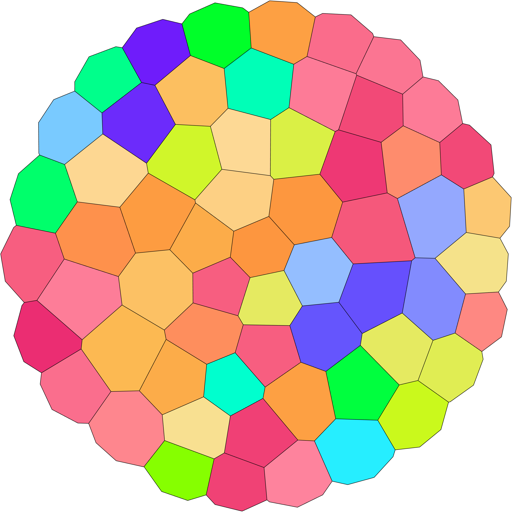
Encoded grain orientations relative to the global x-axis as a color map for the conditional ConvLSTM models.
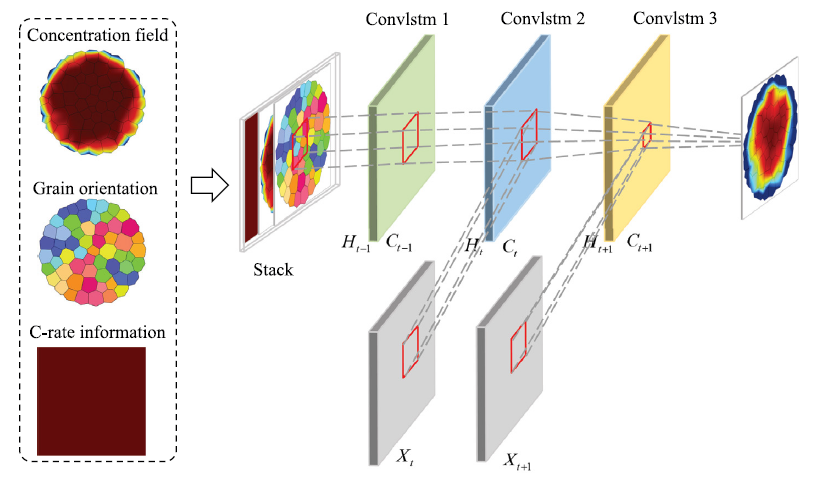
Used separate conditional ConvLSTM models to predict future concentration and stress image sequences from past image sequences, grain-orientation maps, and C-rate inputs.
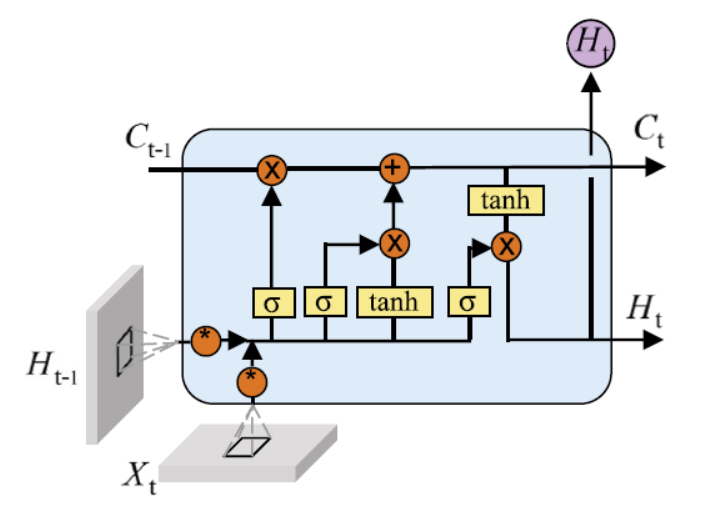
Used convolutional input, forget, and output gates to update the cell and hidden states across the image sequence.
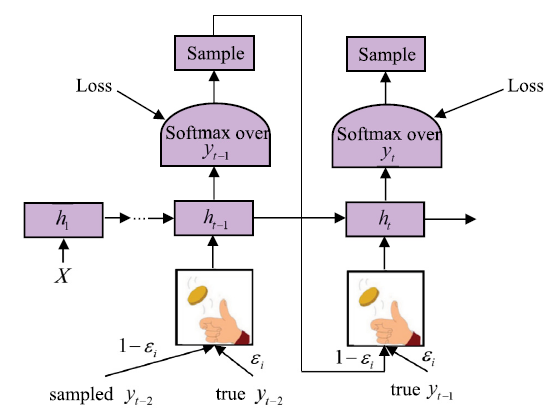
Selected reference or model-predicted frames as inputs during training to prepare the models for autoregressive prediction.
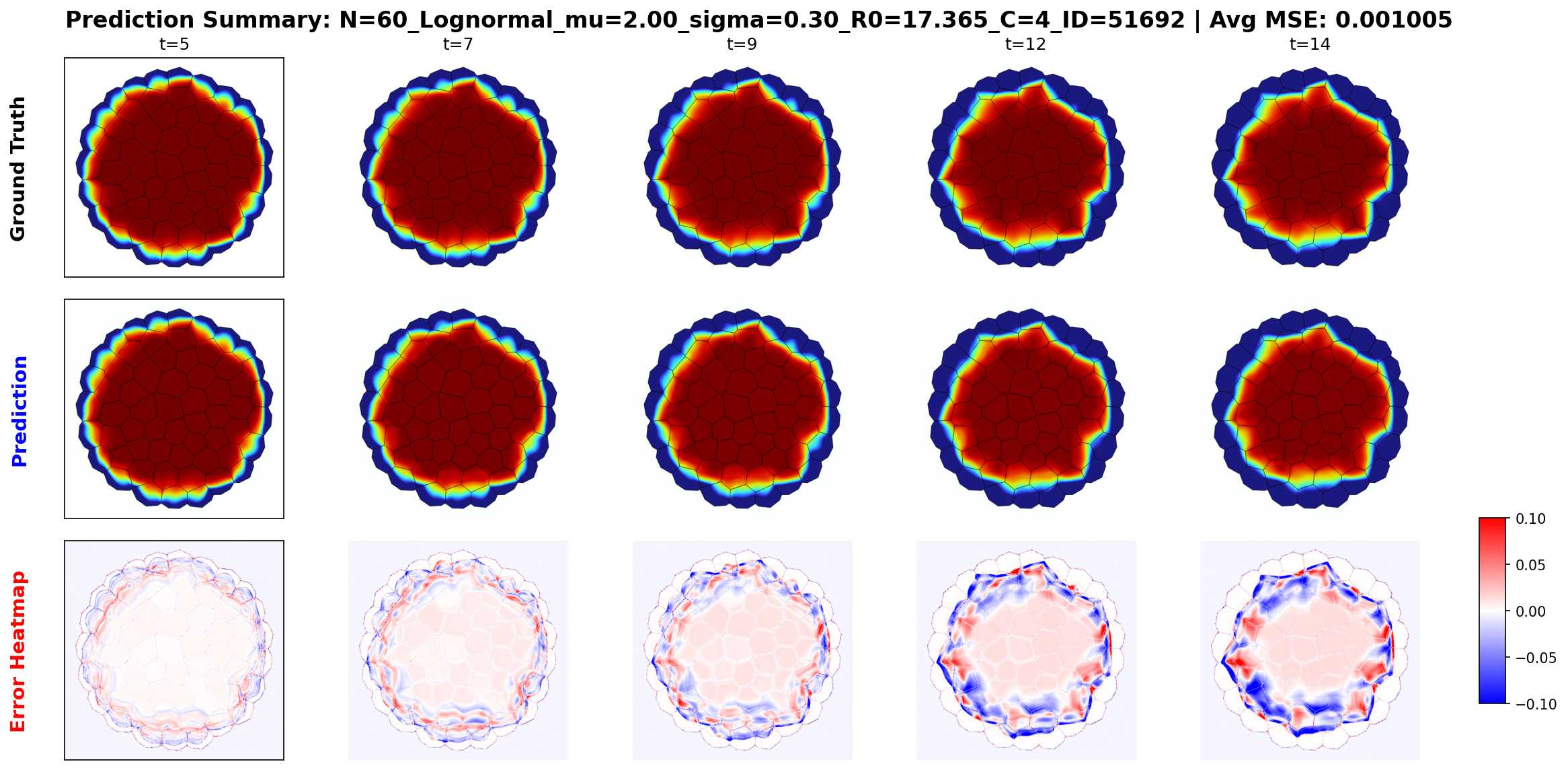
Compared autoregressive concentration predictions with COMSOL reference images and analyzed error accumulation across successive prediction steps using error maps.
3. PINNs for Shock Capturing in the Burgers Equation
Nov. 2025 - Mar. 2026
- Burgers Shock Problem: Studied shock propagation in the one-dimensional inviscid Burgers equation with discontinuous initial conditions, using the analytical solution as a reference.
- Standard PINN: Trained a PINN in PyTorch using PDE-residual, initial-condition, and boundary-condition losses, with automatic differentiation to compute the derivatives in the PDE residual.
- Artificial-Viscosity PINN: Added an artificial-viscosity term with a fixed coefficient to the PDE residual and trained a second PINN to predict the shock profile.
- Prediction Comparison: Compared standard and artificial-viscosity PINN predictions against the analytical inviscid solution, analyzing shock location, transition width, and errors near the discontinuity.
![Burgers Riemann problem setup for x in [-1, 1] and t in (0, 1], with analytical shock sketches and a PINN coordinate network. Automatic differentiation forms the inviscid PDE residual; initial-condition and boundary-condition evaluations separately connect to their full loss sums. The three weighted losses drive the training loop.](/images/research/pinn_shock_problem_framework_v8.svg)
Defined the inviscid Burgers shock problem with initial and boundary conditions. Trained the PINN using PDE-residual, initial-condition, and boundary-condition losses.
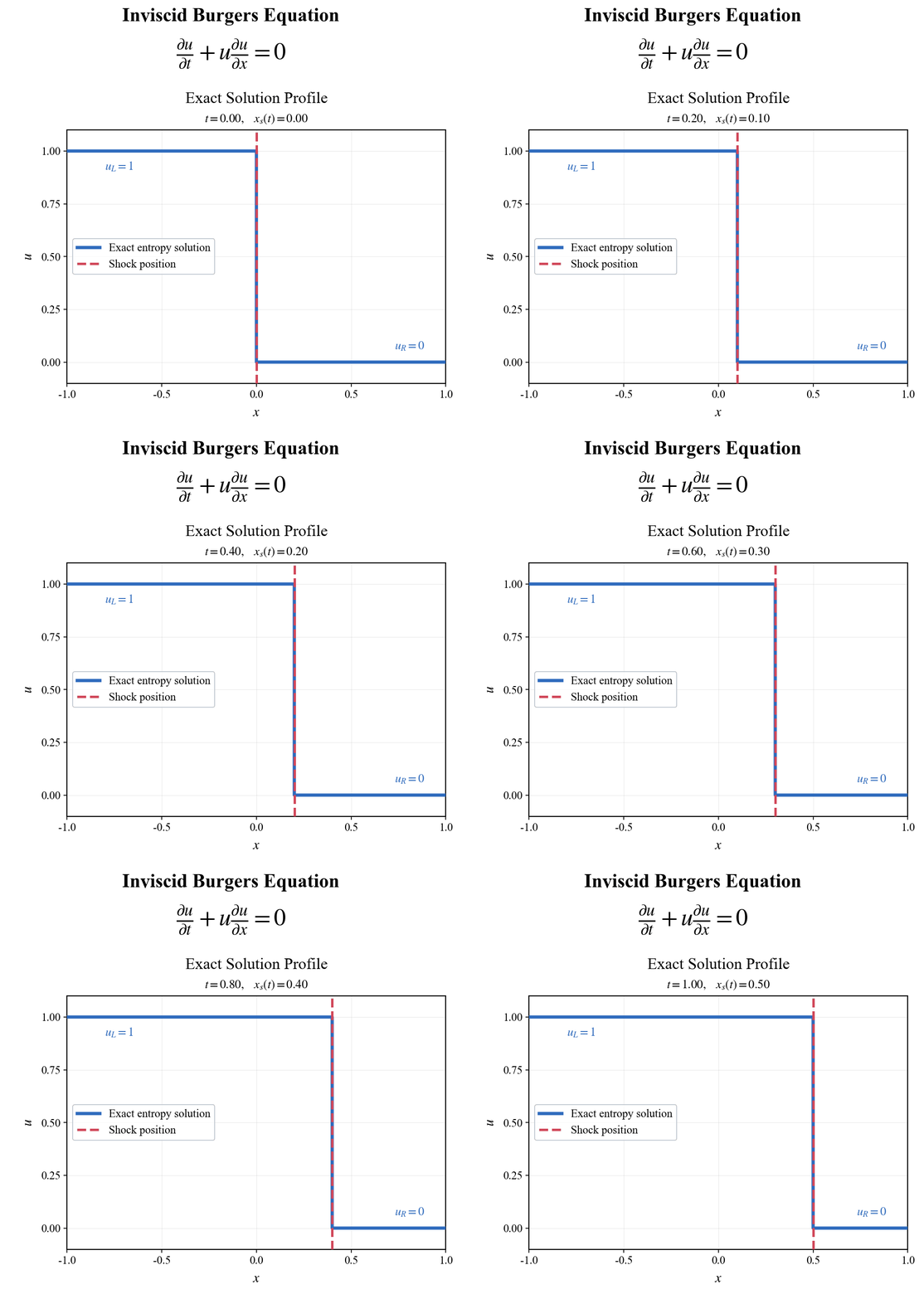
Illustrated the analytical solution of the inviscid Burgers equation, with a discontinuity moving at a constant speed of 0.5.
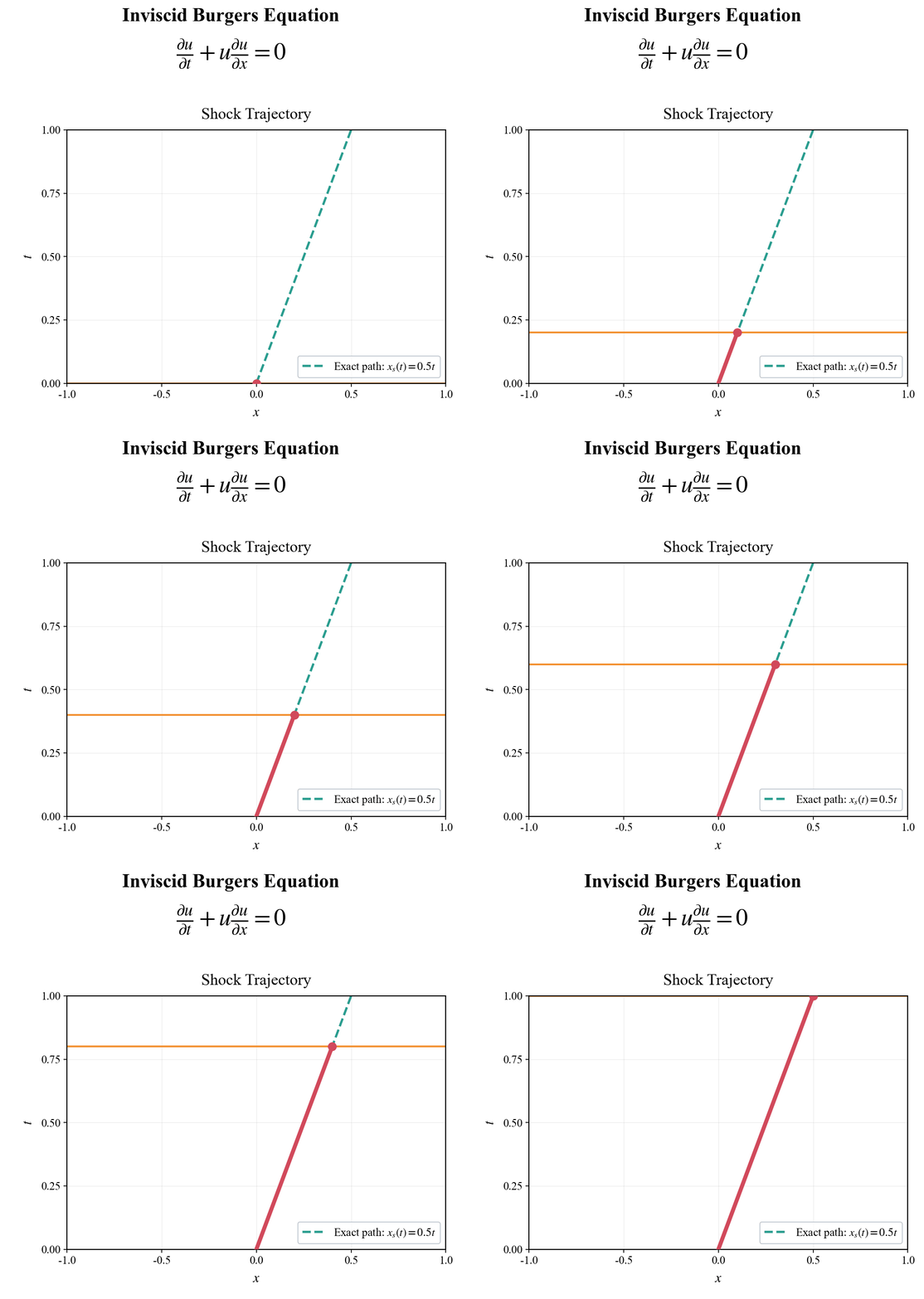
Tracked the analytical shock position along xs(t) = 0.5t in the space–time plane.
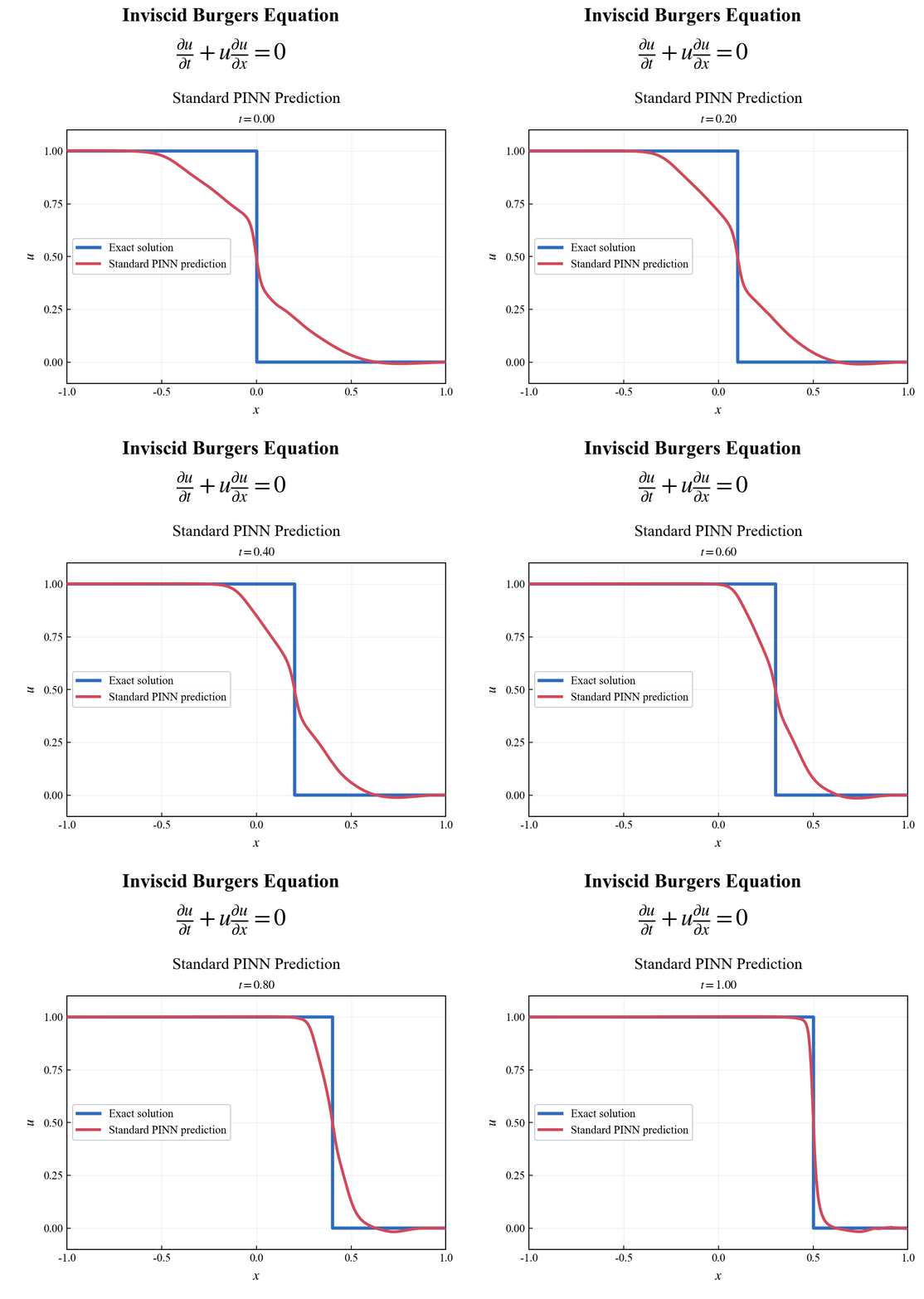
Compared the standard PINN prediction with the analytical inviscid solution over time, examining the shock location and transition width.
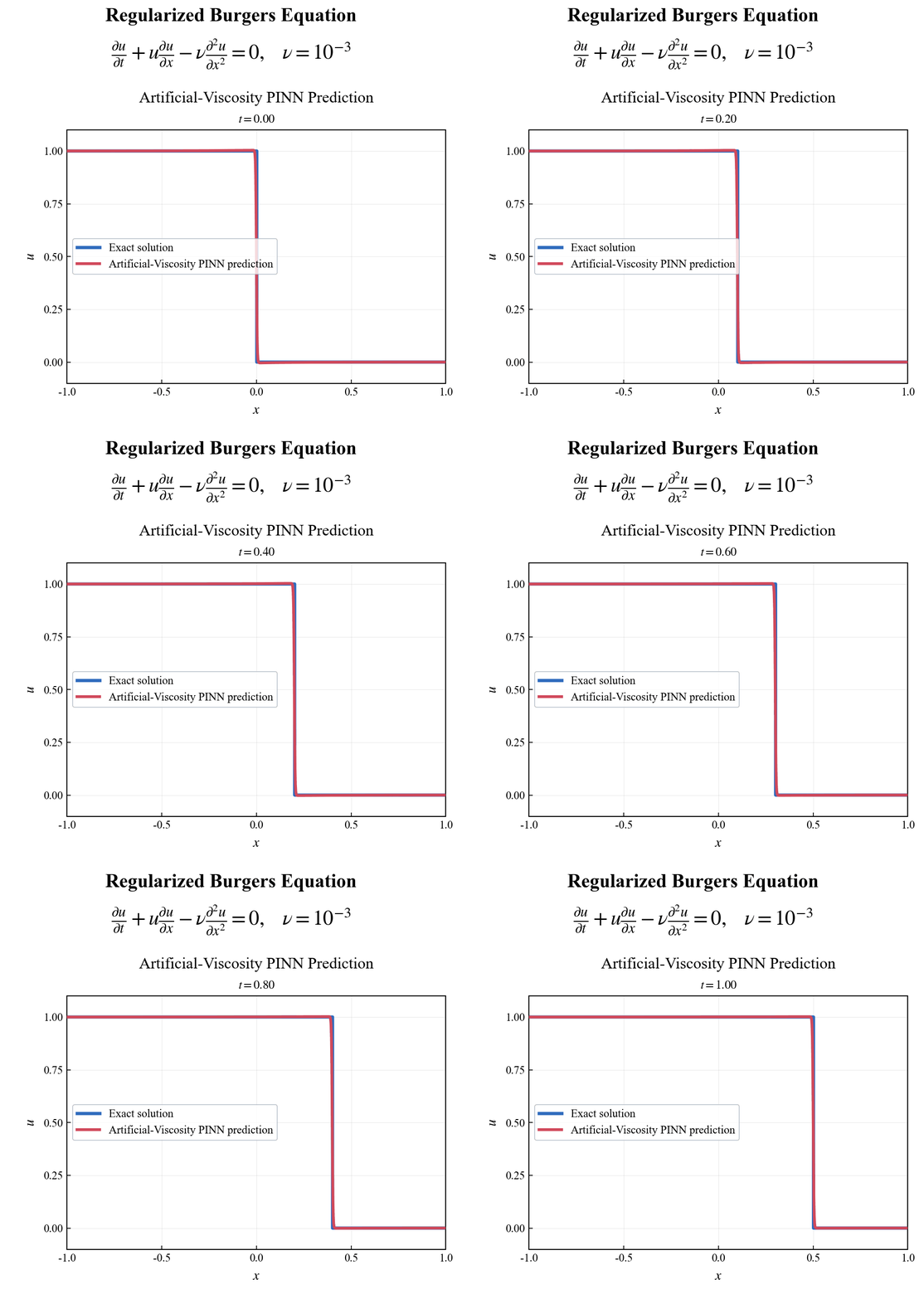
Compared the PINN prediction with fixed artificial viscosity against the analytical inviscid solution, examining the shock location and transition width.
4. Domain-Specific LLM Fine-Tuning for Mechanics of Materials
Sep. 2024 - Apr. 2025
- Mechanics Question Answering: Adapted Qwen2.5-7B for question answering and concept explanation in mechanics of materials.
- Instruction Dataset Construction: Built instruction–response datasets from textbooks and technical literature, covering stress analysis, constitutive laws, and failure theories in mechanics of materials.
- LoRA Fine-Tuning: Fine-tuned Qwen2.5-7B on the instruction–response datasets using LoRA on Google Colab.
- Public Release: Released two instruction–response datasets (Material-mechanics and Material-mechanics-merge) and two fine-tuned Qwen2.5-based model checkpoints (AI_Material_mechanics_assistant and AI_Material_mechanics_assistant_merged) on Hugging Face for question answering in mechanics of materials.
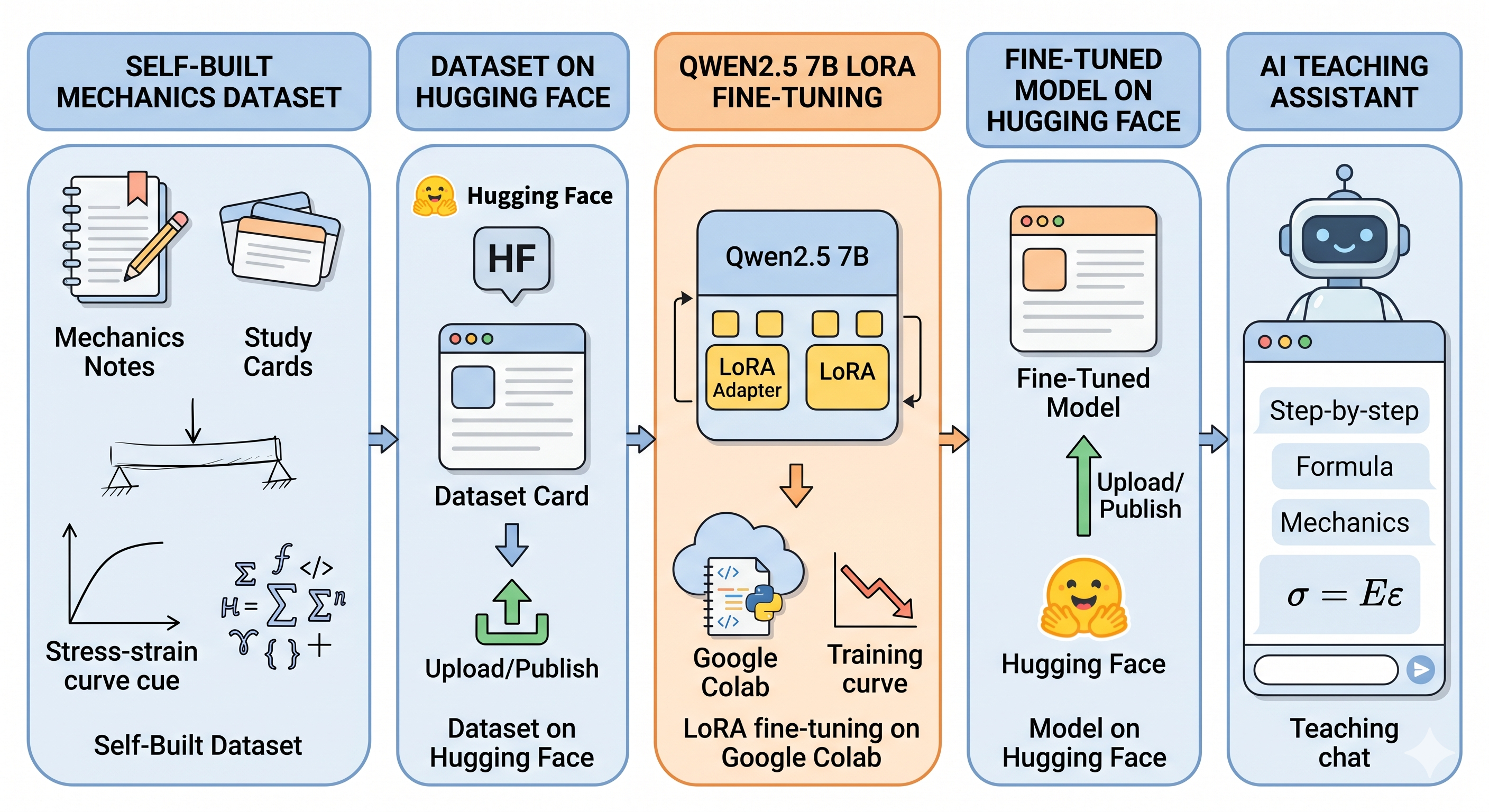
Built instruction–response datasets for mechanics of materials, fine-tuned Qwen2.5-7B using LoRA on Google Colab, and released the datasets and model checkpoints on Hugging Face.